

 Image 1 of 1
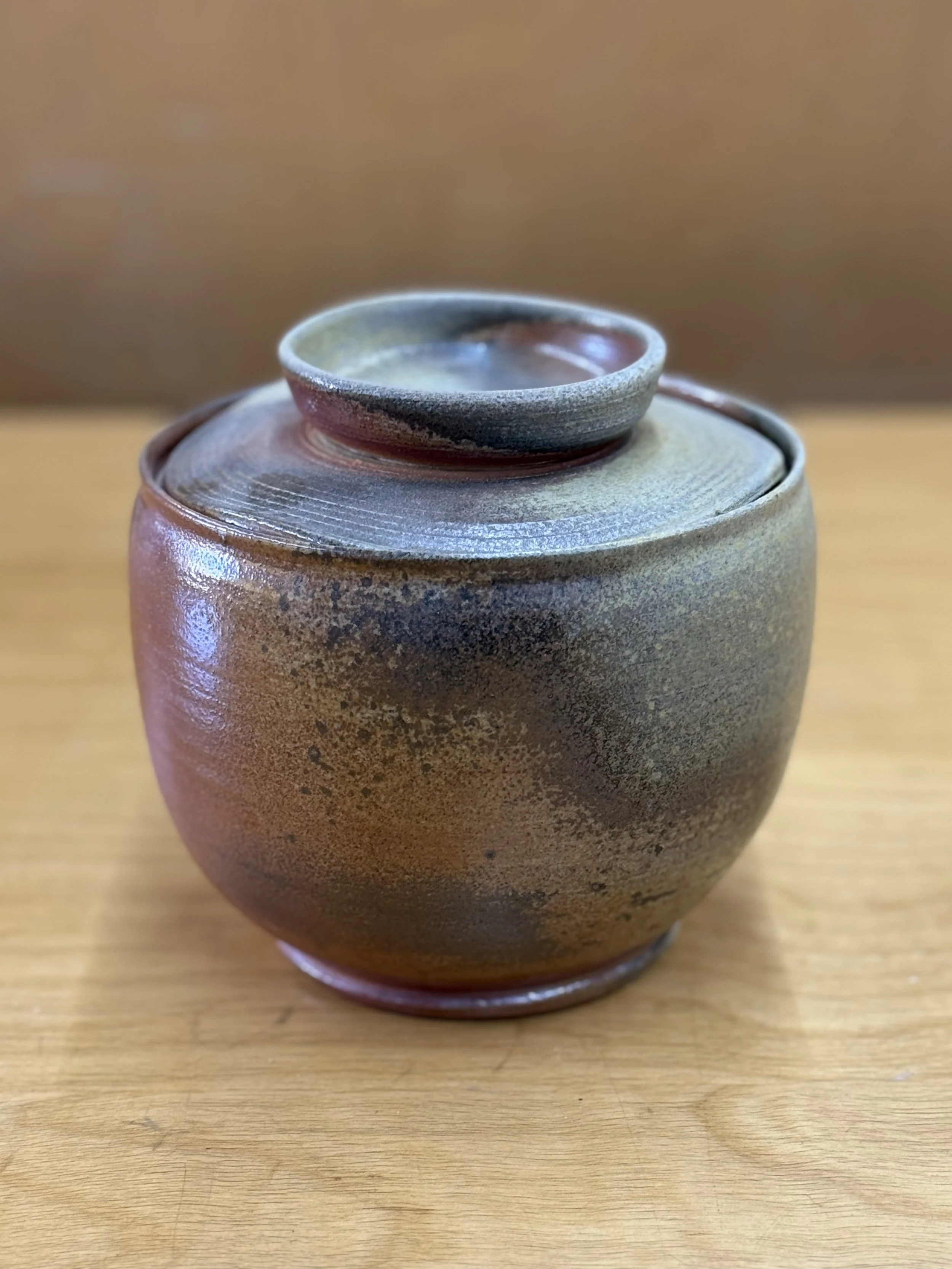
DESCRIPTIONA lidded mizusashi for tea ceremony, fired in an anagama kiln to produce natural ash glaze and irregular kiln textures. Quietly elegant: rounded body and snug lid combining function and restraint. Warm earth tones—amber, olive, charcoal—with flashing and glassy ash pools. Pinholes and drips reflect the kiln’s lively atmosphere. Sized for use, it balances humility and presence, a tactile focus for tea ritual.
A mizusashi (水指) is a lidded Japanese container used in the tea ceremony (chanoyu) to hold fresh, cold water for replenishing the kettle (kama) and rinsing tea bowls or whisks. More than a practical vessel, the mizusashi is integral to the ceremony’s rhythm and aesthetic: its form, material, glaze, and placement contribute to the room’s harmony and seasonal expression. Commonly made from ceramics, lacquer, or wood, mizusashi range from austere, rustic wares to finely finished pieces, each chosen to complement the host’s intent and the gathering’s mood. Careful handling of the mizusashi—lifting its lid, presenting water, and returning the vessel—underscores the measured attentiveness that defines chanoyu.
DESCRIPTIONA lidded mizusashi for tea ceremony, fired in an anagama kiln to produce natural ash glaze and irregular kiln textures. Quietly elegant: rounded body and snug lid combining function and restraint. Warm earth tones—amber, olive, charcoal—with flashing and glassy ash pools. Pinholes and drips reflect the kiln’s lively atmosphere. Sized for use, it balances humility and presence, a tactile focus for tea ritual.
A mizusashi (水指) is a lidded Japanese container used in the tea ceremony (chanoyu) to hold fresh, cold water for replenishing the kettle (kama) and rinsing tea bowls or whisks. More than a practical vessel, the mizusashi is integral to the ceremony’s rhythm and aesthetic: its form, material, glaze, and placement contribute to the room’s harmony and seasonal expression. Commonly made from ceramics, lacquer, or wood, mizusashi range from austere, rustic wares to finely finished pieces, each chosen to complement the host’s intent and the gathering’s mood. Careful handling of the mizusashi—lifting its lid, presenting water, and returning the vessel—underscores the measured attentiveness that defines chanoyu.