

 Image 1 of 1
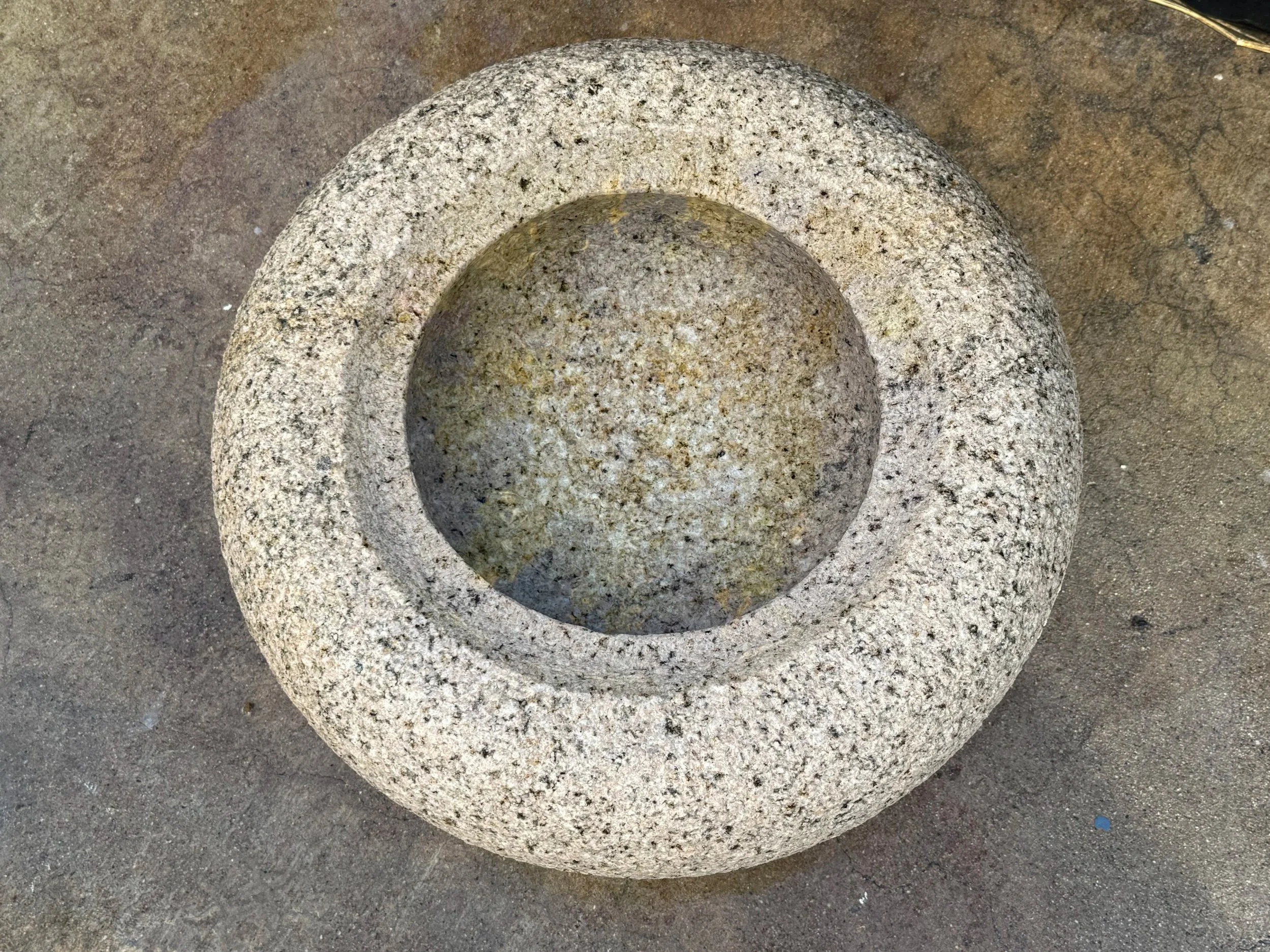
DESCRIPTIONA Chōzubachi (手水鉢) is an ornamental water basin central to traditional Japanese garden design, used for ritual hand-washing and mouth-rinsing before participating in the tea ceremony or entering sacred spaces such as Buddhist temples and Shinto shrines. The term Chōzubachi literally means “water basin for the hands.”
In a classic Tsukubai arrangement, the Chōzubachi is set among carefully placed functional stones called Yaku-ishi (役石). Stones positioned to either side are known as Teshoke-ishi (手燭石) and Yuoke-ishi (湯桶石), while the stepping stone at the front is called Mae-ishi (前石). A stone Ikekomi lantern is often placed behind the basin, complemented by a small tree and carefully chosen plants to frame the scene. Practical elements—a Hishaku bamboo ladle for scooping water and a Shishi Odoshi water-supply mechanism—are commonly integrated to provide movement, sound, and a living water source.
Tsukubai derives from the verb tsukubau (蹲う), meaning “to crouch” or “to bow,” reflecting both the physical posture used at the basin and the broader cultural value of humility. The arrangement is therefore not only functional but symbolic: a quiet, composed space that invites contemplation, cleansing, and respectful preparation before entering a ritual or sacred experience.
DESCRIPTIONA Chōzubachi (手水鉢) is an ornamental water basin central to traditional Japanese garden design, used for ritual hand-washing and mouth-rinsing before participating in the tea ceremony or entering sacred spaces such as Buddhist temples and Shinto shrines. The term Chōzubachi literally means “water basin for the hands.”
In a classic Tsukubai arrangement, the Chōzubachi is set among carefully placed functional stones called Yaku-ishi (役石). Stones positioned to either side are known as Teshoke-ishi (手燭石) and Yuoke-ishi (湯桶石), while the stepping stone at the front is called Mae-ishi (前石). A stone Ikekomi lantern is often placed behind the basin, complemented by a small tree and carefully chosen plants to frame the scene. Practical elements—a Hishaku bamboo ladle for scooping water and a Shishi Odoshi water-supply mechanism—are commonly integrated to provide movement, sound, and a living water source.
Tsukubai derives from the verb tsukubau (蹲う), meaning “to crouch” or “to bow,” reflecting both the physical posture used at the basin and the broader cultural value of humility. The arrangement is therefore not only functional but symbolic: a quiet, composed space that invites contemplation, cleansing, and respectful preparation before entering a ritual or sacred experience.